← the journal/review · 28 may 2026
rubber plant: sturdy, shiny, hates moving house
rubber plant — Ficus elastica
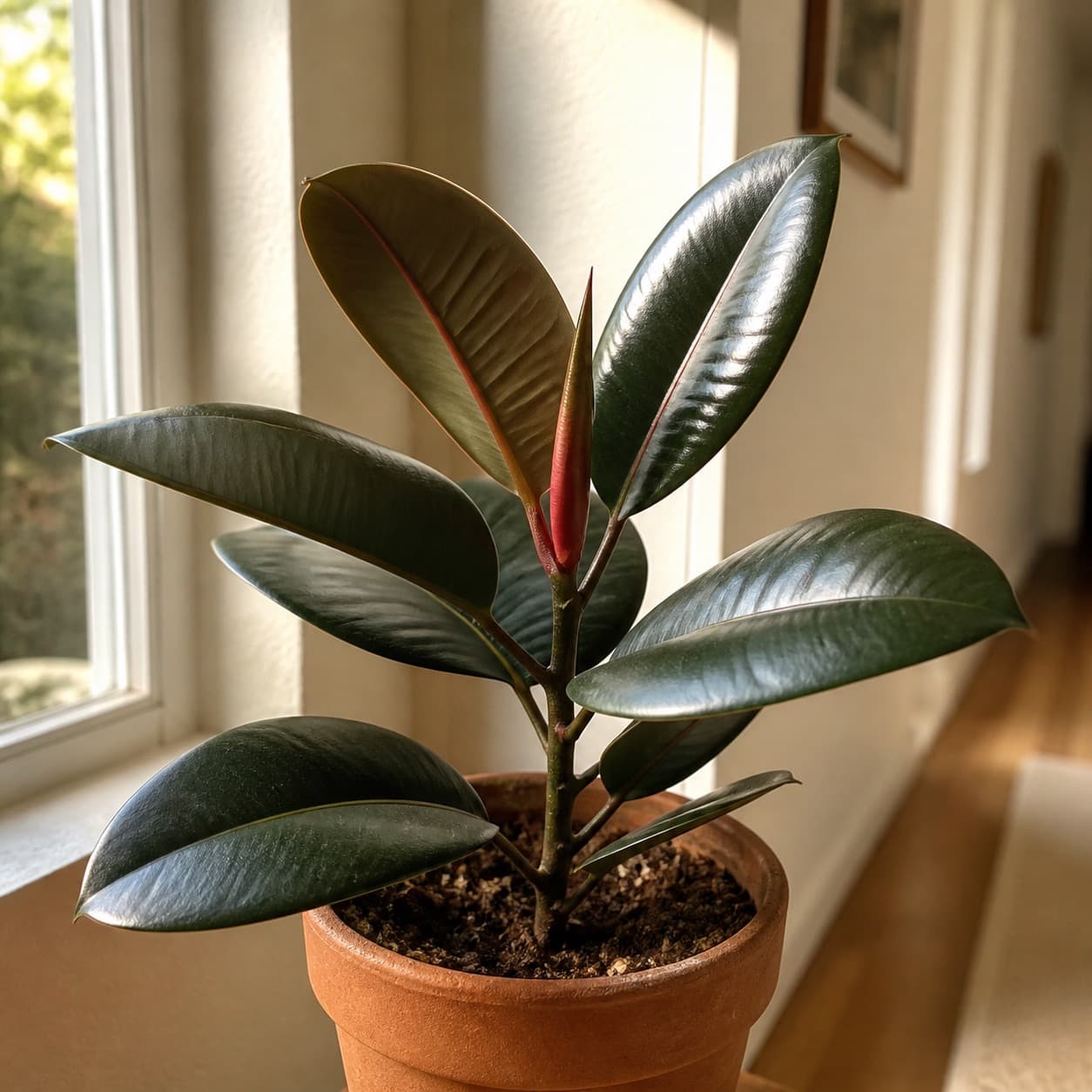
the rubber plant (ficus elastica) is a sturdy, fast-growing houseplant with big glossy leaves that tolerates average rooms well — its main quirk is that it hates being moved and often drops leaves after relocating, a stress response shared by most ficus. give it one bright spot and leave it there, water when the top soil is dry, and wipe the leaves regularly: they're dust magnets, and dust blocks light.
8/10
pick the spot once. then never again.
the case for the rubber plant
if the fiddle leaf fig is the beautiful liar, the rubber plant is its employable sibling: same ficus family, same architectural presence, a fraction of the temperament. the leaves are thick, glossy, and built like upholstery — they shrug off dry air, missed waterings, and average light in a way the fiddle never will. mine has survived two heatwaves, one three-week vacation, and a toddler-adjacent incident involving a football. it grows fast enough to feel rewarding (a happy one puts out a new leaf every few weeks in summer, unrolling from a red sheath like a tiny scroll) and it reads as expensive while costing supermarket money.
the moving problem
here's the two points off: ficus elastica forms an opinion about its location and defends it. move it across the room — sometimes just rotate it too enthusiastically — and it may drop two, three, four leaves over the following weeks in protest. this isn't illness; it's a ficus-family stress response to changed light. the protocol: choose a bright spot with some indirect light before you buy, put it there, and stop redecorating around it. if you must move it, do it once, to somewhere brighter, and accept the leaf tax. it re-stabilizes within a month or two. it does not, however, forgive — the dropped leaves never come back, growth resumes from the top.
wipe the leaves. no really.
those big flat glossy leaves are the best dust collectors in your home — better than the shelves, somehow. a visible grey film builds within weeks, and it's not just cosmetic: dust physically blocks light, and light is the plant's entire income. once or twice a month, support each leaf with one hand and wipe the top with a damp cloth. it takes five minutes, the plant measurably perks up over time, and the post-wipe shine is genuinely the most satisfying ritual in houseplant care. skip the leaf-shine sprays — they clog the pores the leaf breathes through. water on a cloth wins.
the small print
the white sap that bleeds when you cut or tear a leaf is latex — it's the 'rubber' in rubber plant, it's mildly irritating to skin and to pets that chew, and it stains clothes permanently (ask my favorite shirt). wash your hands after pruning. and prune you eventually will: a happy rubber plant heads for the ceiling as a single pole unless you cut the top, which makes it branch out below the cut. scary the first time, transformative after. verdict stands: buy again — but decide where it lives before it comes home.
people keep asking…
- why is my rubber plant dropping leaves?
- the most common cause is relocation stress — rubber plants react to a changed spot or light by shedding leaves for a few weeks. other suspects: overwatering (soft yellowing leaves, wet soil) and cold drafts. if you recently moved it, leave it where it is and let it settle.
- how often should i water a rubber plant?
- when the top few centimeters of soil are dry — about weekly in summer, every two to three weeks in winter. its thick leaves store some moisture, so it handles a missed watering far better than soggy soil.
- should i clean my rubber plant's leaves?
- yes, once or twice a month with a damp cloth — the big glossy leaves collect dust fast, and dust blocks the light the plant feeds on. skip leaf-shine sprays, which clog the leaf pores.
- is the rubber plant toxic to pets?
- mildly — the white latex sap irritates the mouth and stomach when chewed and can irritate skin. it's rarely serious, but with a dedicated plant-chewer, go for a cat-safe option like the spider plant.
the weekly entry
real plant talk. once a week.
no fluff. just the stuff we all wish we knew sooner.
unsubscribe anytime. your inbox, your rules.